Foundation Watering
in Southlake —
Discreet. Compliant. Done Right.
Southlake is the farthest of my service cities — about a twenty-minute drive from North Richland Hills — and the highest-end. The city enforces its watering restrictions stringently and monitors high-use accounts, which is exactly why the any-day exemption for foundation drip matters here: it lets you protect a major investment without ever tripping a violation. A foundation drip line installs discreetly into a professionally designed landscape, tucked under mulch and beds. $0 service call. Free on-site assessment. And if your house doesn't need one, I'll tell you.
Foundation watering in Southlake means installing a dedicated drip zone that keeps the expansive North Texas clay around your slab evenly moist, reducing the shrink-swell movement that cracks foundations. It's done by licensed Texas irrigator Landon Melvin (TCEQ LI0031476), based in nearby North Richland Hills, about 20 minutes away. Foundation drip is exempt from the twice-a-week sprinkler limit, so it can run any day. $0 service call, free assessment, and an honest answer on whether you need one.
It's the Clay Under Your House.
Southlake's newer, larger homes sit on the same expansive Cross Timbers clay as the rest of the area. A bigger, more valuable home on that clay simply has more at stake when the soil moves — which is the case for keeping it steady.
The clay shrinks
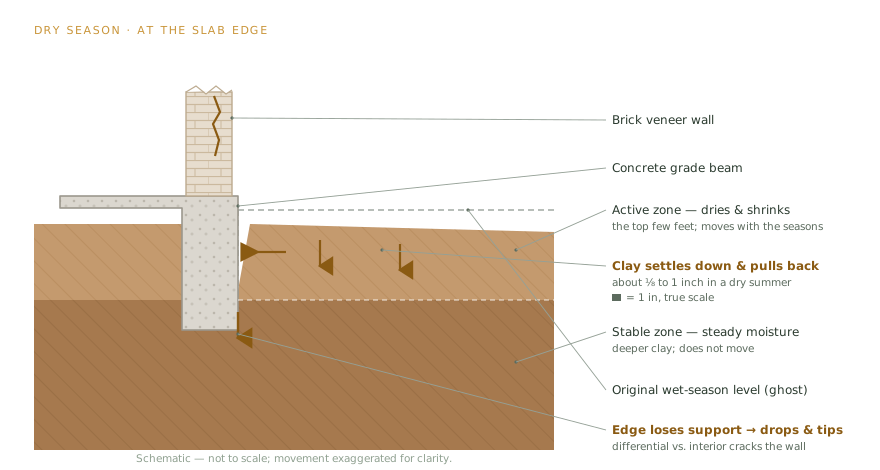
Weeks of heat and no rain pull moisture out of the soil. It contracts and pulls away from your slab, leaving gaps underneath.
The clay swells
A downpour swells the soil back up — but unevenly, faster on some sides than others. Every swing flexes the slab.
The slab cracks
That repeated, uneven movement is what cracks foundations, sticks doors, and splits drywall.
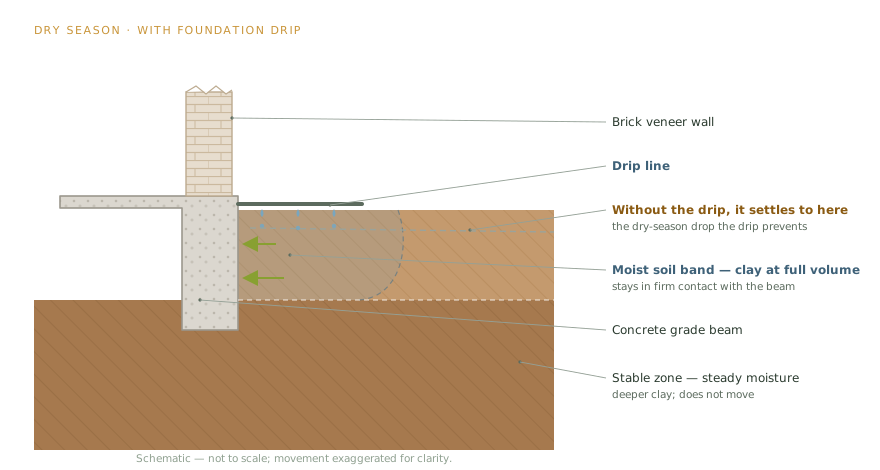
Keep the soil around the foundation at a steady moisture level and the swings stop. That's all a foundation drip system does — and it's why it works so well on Southlake's clay. The full science is in the complete foundation drip guide.
Your Foundation Can Run
Any Day.
This is the part most homeowners get wrong, and it matters: Southlake's twice-a-week limit is for sprinklers. Your foundation is treated differently.
Sprinklers are limited. Foundation drip isn't.
Southlake runs the permanent, year-round twice-a-week watering schedule used across the Mid-Cities. In-ground sprinklers are held to two days a week and may not run in the heat of the day. But drip, soaker, and hand watering for your foundation are handled separately — they can be done any day. That's exactly why a dedicated foundation zone is the right tool: it keeps your slab's soil steady on the schedule your foundation needs, without touching your sprinkler days.
Southlake enforces its watering restrictions stringently and actively watches high-use accounts — run your sprinklers during restricted hours even once and you can get a visit. That's exactly why the any-day exemption for foundation drip is so valuable here: a dedicated foundation zone keeps your slab's soil steady on its own schedule, fully compliant, while your sprinklers stay inside the lines. And because Southlake landscapes are professionally designed, a drip line installs discreetly — tucked under beds and mulch, integrated cleanly with what's already there. I show up on time, in a clean truck, and treat the property like my own.
What Southlake homeowners should know.
Where Southlake foundations move most
Southlake’s homes are newer and bigger, but newer doesn’t mean immune. A large estate slab on expansive clay simply has more perimeter exposed to the same shrink-swell — more sides, more linear feet of edge that can lose support when the clay dries. The deep beds and big lots common in Timarron and the Hills of Monticello also mean more landscaping pulling moisture from the soil. On an expensive home, that’s a lot of foundation to protect, and the cost of letting it move dwarfs the cost of keeping the soil steady.
Watering your foundation through the year
The clay moves most in summer, and on a big Southlake lot that movement is spread across a lot of slab. From June through September the heat dries the soil, it shrinks from the edges, and the corners and long runs of the foundation start to lose support. A properly zoned foundation system — sized for the actual perimeter, not a token line — holds the moisture even through the season. On an estate home the math is simple: consistent watering is a rounding error next to a structural repair.
Signs your Southlake slab is moving
On a larger home the signs can be subtle because the movement is spread out: a door or two that stick in late summer, hairline cracks above openings, stair-step cracks in stone or brick, tile that cracks along a grout line, or a floor that reads slightly off-level. Catching it early on an expensive home is worth far more than the watering costs to prevent it. The full mechanism is in the complete foundation guide.
You Get Landon.
Every Time.
Southlake homeowners expect competence and discretion, and that's what they get — the same licensed irrigator every visit, on time, treating your property the way I'd treat my own.
A crew from somewhere else
- A rotating crew you've never met, dispatched from across DFW
- Priced to feed a sales team and an office — and to upsell the whole house
- Here today, hard to reach when you have a question next season
- Generic schedule that doesn't account for your specific Southlake soil
The licensed irrigator who answers the phone
- Based in nearby North Richland Hills — Landon does the assessment and the install himself
- $0 service call, and only the sides that need coverage get scoped — no default upsell
- The same person every time, who knows your system because he built it
- Programmed for the local expansive clay and Southlake's watering rules, firsthand
- Licensed Texas irrigator (TCEQ LI0031476) — the work is done to code and built to last
The Short Version
for Southlake Homes.
It starts free, and it starts honest. The full process, components, and cost breakdown live on the installation page — here's the shape of it.
A free on-site look at your soil and which sides need coverage, an honest recommendation (including "you don't need one" when that's true), then a dedicated drip zone — its own valve, an inline filter, a pressure regulator, and pressure-compensating line set about a foot out from the slab — programmed for your soil and the local rules, with a walk-through and a yearly check. See the full breakdown and honest cost drivers on the foundation drip installation page.
Yes. Southlake follows the regional year-round twice-a-week schedule, but that limit is for in-ground sprinklers. Drip, soaker, and hand watering for a foundation are treated separately and may be done any day — so a dedicated foundation zone runs on the schedule your slab needs. Check your exact sprinkler days and the official source on the watering-restrictions page.
Southlake sits on the same expansive clay as the rest of the Mid-Cities — a high-shrink-swell soil that expands when wet and contracts hard when it dries in summer. As the soil pulls away from the slab and the moisture underneath gets uneven, the slab moves, and that movement cracks foundations. Keeping the perimeter soil steady prevents it — exactly what a foundation drip system does.
Spray Irrigation Co. is based in North Richland Hills, about 20 minutes from Southlake, and owner-operated by Landon Melvin. You get the same licensed irrigator who answers the phone showing up to do the work — not a rotating crew from a franchise across the metroplex. I know the local clay and the regional watering rules firsthand.
For a permanent irrigation system tied into your water supply, yes — Texas requires it be done by an irrigator licensed through the TCEQ. Spray Irrigation Co. is licensed (LI0031476). A DIY soaker hose on a garden spigot is a different matter, but a proper installed foundation zone with a dedicated valve should be done by a licensed irrigator — for code and for a system that lasts.
Installs start at $1,500, and the final price depends on the home, so the assessment is free and there's no service call fee. The main drivers are how many sides need coverage, the linear footage of drip line, and whether it ties into an existing controller. I quote it straight after seeing your house — and if your home doesn't need a system, I'll tell you. The full breakdown is on the installation page.
No — and this is where it actually works in your favor. Southlake's restrictions limit in-ground sprinklers to set days and hours, but drip and foundation watering are exempt and may run any day. A dedicated foundation zone is programmed to keep your slab's soil steady while staying fully compliant with the sprinkler rules, so you protect your home without risking a violation — which matters in a city that enforces and monitors as closely as Southlake does. I program every Southlake controller to stay inside the lines.
Before the summer dry-down. Southlake's clay pulls away from slabs through the June-to-September heat, so a foundation system should be running by early summer and held steady through it. On a large slab, starting late means more perimeter has already lost support.
Not always the whole perimeter, but more of it than a small home. The sides that need coverage are the ones exposed to the most drying — typically the south and west faces and any side with deep beds or big trees pulling moisture. The free assessment scopes which sides actually need it, so you're not paying to wrap line around a side that doesn't move. On a big home, getting that right is most of the value.
Let a Local Irrigator
Take a Look.
No trip fee. No pressure. No contract. I'll come out to your Southlake home, check your soil and drainage, and tell you honestly whether a foundation system is worth it — and quote it straight if it is.